Click below to expand each section for draft messaging for social media.
You can download visual assets to complement most categories below the draft messaging.
- Hurricane ____________ [insert name] has passed, but hazards remain. There may be power lines down throughout the area. Never, ever touch a downed power line and never touch anything in contact with one. Stay back – at least 30 feet. Always assume a downed power line is energized.
- See a downed power line? Stay far away and report it to ____________ [insert utility information for reporting downed power lines]. Do not attempt to move it, remove debris from it, or drive over it. Your safety is our top priority.
- We know you’re ready to get things back to normal at your house or neighborhood, but please do not pull tree limbs off power lines. It is not safe. Call us and we’ll be there soon to help.
- Be safe following Hurricane ____________ [insert name] and don’t try to make electrical repairs yourself. Let our crews of experienced professionals handle the job or call a professional electrician.
- Check your weatherhead! The weatherhead is located above the electric meter where wires exit the conduit. If it’s damaged, utility workers cannot reconnect service to your home. Weatherhead repairs are the homeowner’s responsibility, but always use a licensed electrician for the job.
- Generator safety tip: always operate portable generators in an open and ventilated area and NEVER inside your home or garage. That could be deadly. Always place the generator at least 15-20 feet from the house and away from doors and windows.
- Never connect a generator to your home’s main electrical system. This could create a dangerous back feed that could seriously injure electric restoration crews or others nearby. Plug appliances directly into the generator only.
- Use battery-operated carbon monoxide alarms in your home and garage when running a generator. Carbon monoxide is odorless and colorless. Alarms save lives.
- Don’t run a portable generator in the rain. The exception is if you cover and vent it. Also, make sure your hands and feet are dry before touching or starting the generator. Try to avoid standing near wet areas or puddles when operating your generator.
- Before refueling, turn off a gas-powered generator and let it cool. Gasoline spilled on hot engine parts can ignite. Allowing cooling also reduces the risks of burns while refueling.
- Remember to turn off your generator before turning your house power back on.
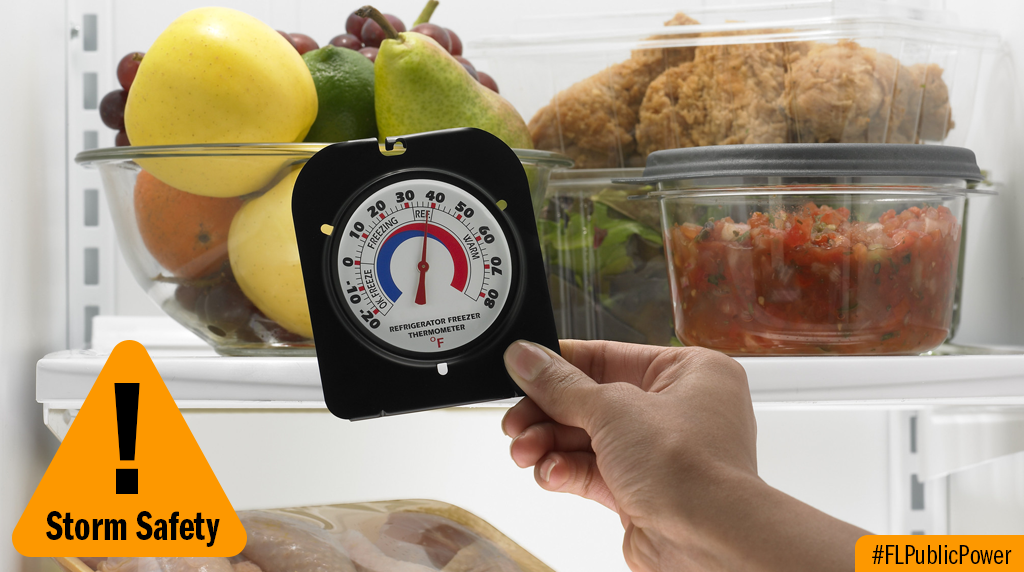
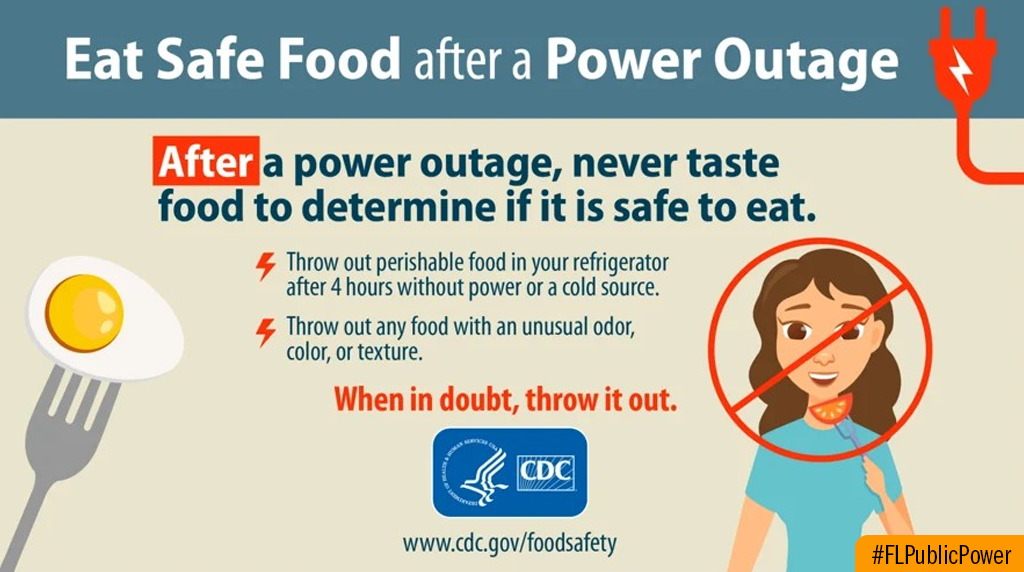
- The refrigerator will keep food safely cold for about four hours kept closed. A full freezer holds the temperature for up to 48 hours (24 hours if the freezer is only half full).
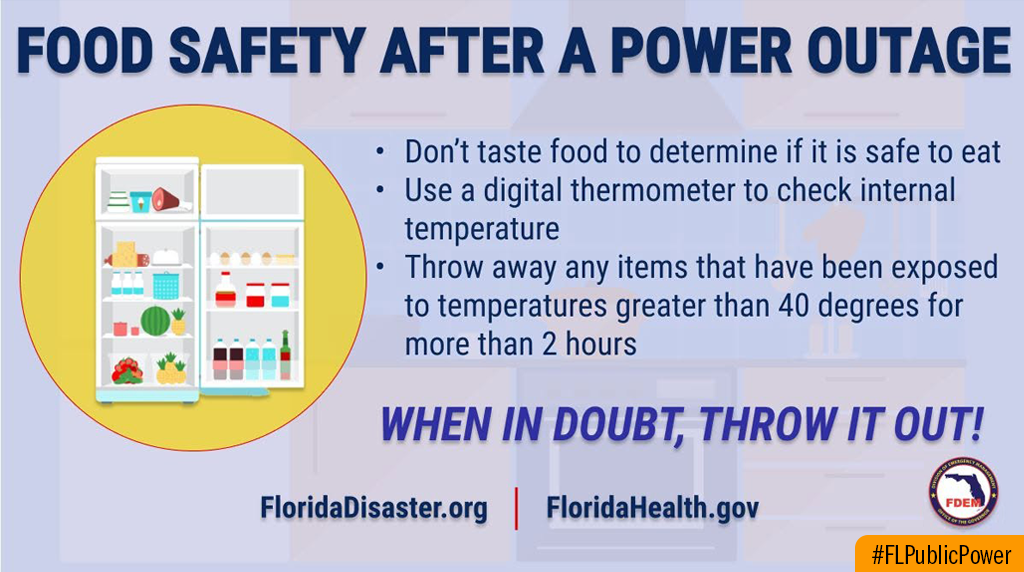
- If the power has been out for several days, then check the temperature of the freezer with an appliance or food thermometer. If the food still contains ice crystals or is at 40° F or below, the food is safe and may be safely refrozen.
- Concerned about your food? When in doubt, throw it out!! Additionally, never taste a food to determine its safety.
- Food safety tips: Do not eat any food that may have come into contact with flood water, including canned goods with damaged cans or in containers that have been water damaged.
- Flooded roads are dangerous for all vehicles, including EVs. Avoid driving through floodwaters. Water can damage electrical systems and battery packs, disabling the vehicle and heightening the risk of battery fire. If your EV has been submerged or exposed to saltwater, do not drive or charge it until it has been inspected by a qualified technician first. Flooded EV batteries can pose delayed fire risk days or even weeks later.
- Electric vehicles are designed with multiple safety protections. However, like any vehicle, they can be damaged by flooding. If your EV has been submerged or exposed to saltwater, do not drive or charge it until inspected. If you suspect battery damage, keep the vehicle away from buildings or other cars. Never touch charging equipment in standing water or that you suspect has been submerged in floodwaters.
- Public charging availability may change after storms. Expect some charging stations to be offline after severe weather. Check apps or utility updates for charger availability. Never use a charger that appears damaged or flooded.
 Enter your email address in the