Click below to expand each section for draft messaging for social media.
You can download visual assets to complement most categories below the draft messaging.
- _______________________ [insert utility name] prepares year-round for hurricane season by hardening infrastructure, trimming trees, maintaining and replacing poles, wires, and other equipment, and conducting annual storm readiness drills. These ongoing efforts help keep our system resilient during storms and other emergencies. Your Florida public power utility is ready for the _______________________ [insert year] hurricane season, and our nationwide mutual aid network stands ready to support power restoration when needed.
- Hurricane season runs from June 1 through November 30! Florida families and businesses should have a disaster preparedness plan and a stocked emergency supply kit before a storm threatens. Start at www.ready.gov and www.floridadisaster.org.
- Your family’s hurricane preparedness plan should include contact information for everyone in your family, medical information (including prescriptions), established emergency meeting places and evacuation routes, and strategies for preparing your home for a hurricane. Get started at https://www.floridadisaster.org/planprepare/home/.
- Hurricane season is here. Prepare now: trim trees near power lines now to prevent outages later. Assemble your emergency supply kits. Plan for possible extended outages. Bookmark our storm response page for updates: _______________________ [insert link to webpage].
- A business hurricane preparedness plan is just as important as a family plan. Make sure you have a building evacuation plan, copies of important paperwork, a system for communicating with employees and a plan for business operations following a storm.
- After a storm, you need to be ready to be self-sufficient for at least three days. Make sure your emergency supply kit is stocked with these items together BEFORE hurricane season starts: www.floridadisaster.org/planprepare/hurricane-supply-checklist.
- Did you know that you need to store at least a three-day supply of water for each person in your household, with one gallon of water per person per day? Refresh stored water every six months.
- Your hurricane emergency supply kit essentials: water, batteries, flashlights, canned/non-perishable food, important family documents in a waterproof container, medications, and a battery-powered radio, among other items. Check expiration dates and restock anything old or spoiled. Visit www.floridadisaster.org/planprepare/hurricane-supply-checklist for more information.
- Stock up on tax-free hurricane supplies! Many are now permanently exempt from Florida sales tax: many battery types, bicycle helmets, carbon monoxide alarms, fire extinguishers, ground anchor systems and tie-down kits, insect repellent, life jackets, portable gas cans, portable generators, smoke detection devices, sunscreen, and waterproof tarps.
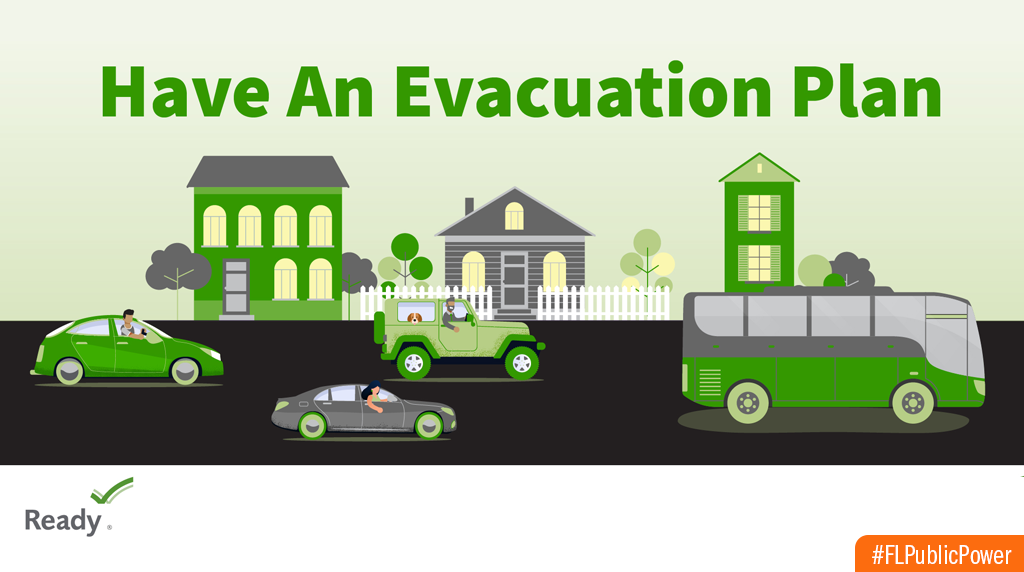
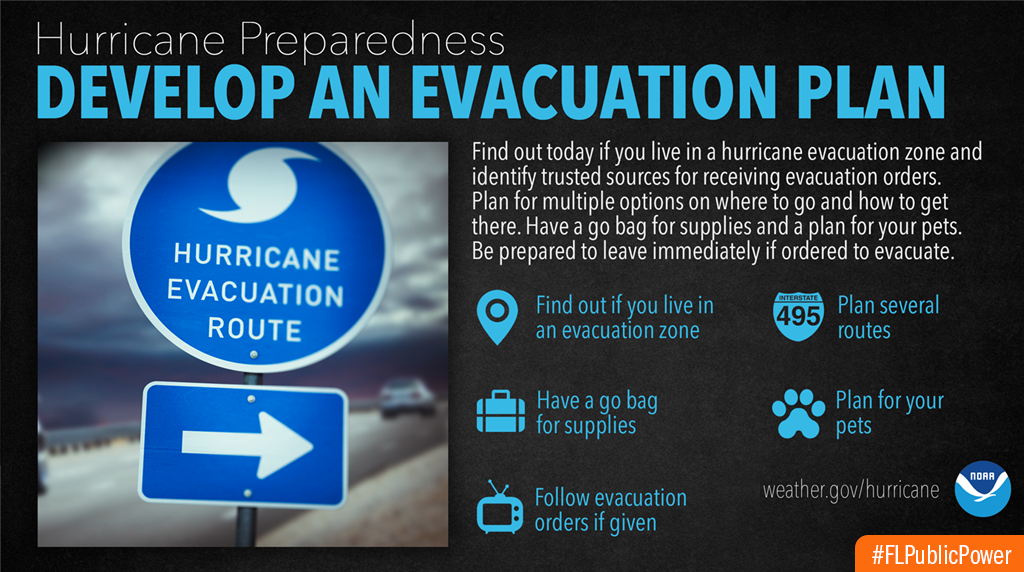
- Evacuations don’t have to be hundreds of miles. Even moving tens of miles can take you out of harm’s way. Know your evacuation zone and have a destination in mind before a storm threatens. Consider staying at a hotel or with friends or family outside the storm’s path or in a public shelter.
- Live in a vulnerable area such as a mobile home, an area that floods frequently, on a barrier island or near the coast? If you are in the path of a storm and ordered to evacuate, go. Consider staying with nearby friends or family outside the evacuation zone, locate to a house that can withstand hurricane-force winds and rain, or find a nearby shelter.
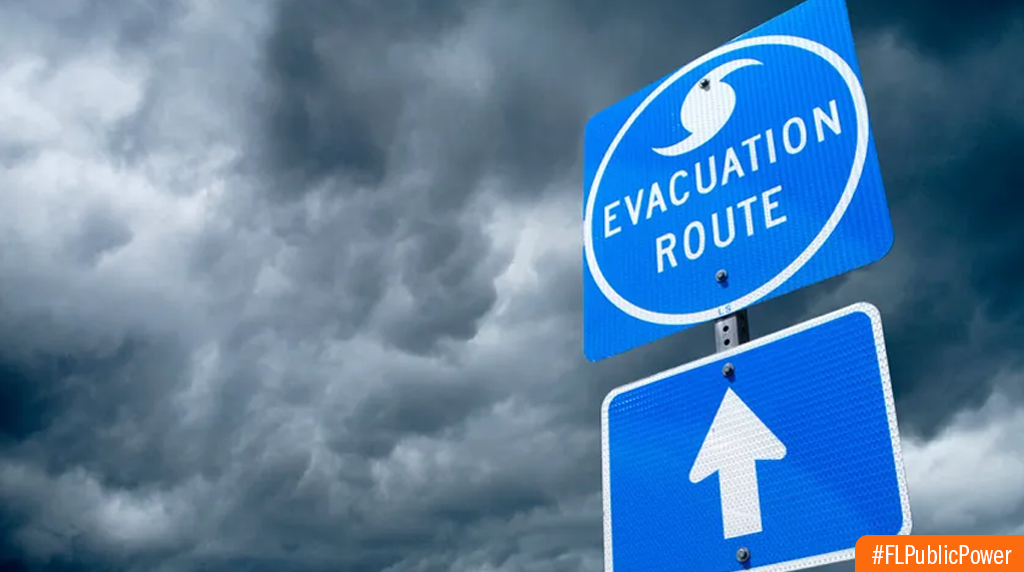
- It is not unusual for people living on the coast or in low-lying areas to be ordered to evacuate when a hurricane threatens. Pay attention to news reports, social media, weather updates and other communications channels. Other warning methods, such as text messages, emails, phone calls and sirens may also be used to alert you of an ordered evacuation.
- Keep your vehicle’s gas tank or EV battery at least half-full during hurricane season. Avoid long lines at gas stations, gas shortages or long charging time for batteries. For EV drivers: plan evacuation routes with charging stations in mind and know your vehicle’s range on a full charge.
- Test your generator before the start of hurricane season. A generator that has been sitting for months unused needs to be primed to work properly during an emergency. Now is the time to check fuel, connections, and run time.
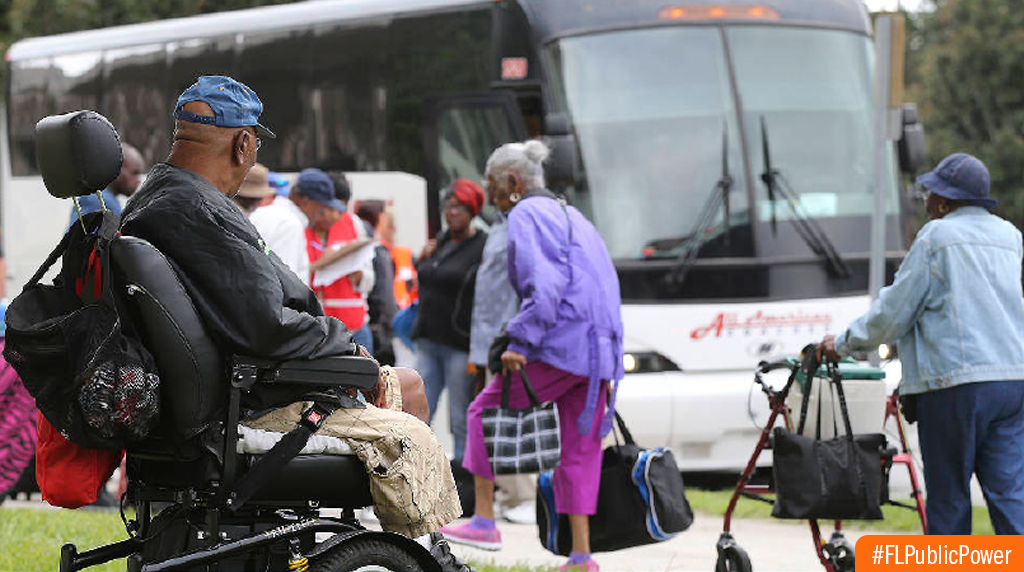
- If you or someone in your household is disabled or has special needs and requires assistance with evacuation or sheltering in the event of a hurricane, please contact _______________________ [insert appropriate city/county agency name and contact information].
- Pets need plans, too! Keep your pets in mind when putting together your hurricane preparedness plan and make sure to confirm pet-friendly shelters or lodging in advance.
 Enter your email address in the